Featured Instructor
Show Them What They Can Do
Gary Mah — SPEAR Level 1 Instructor, Virginia Beach
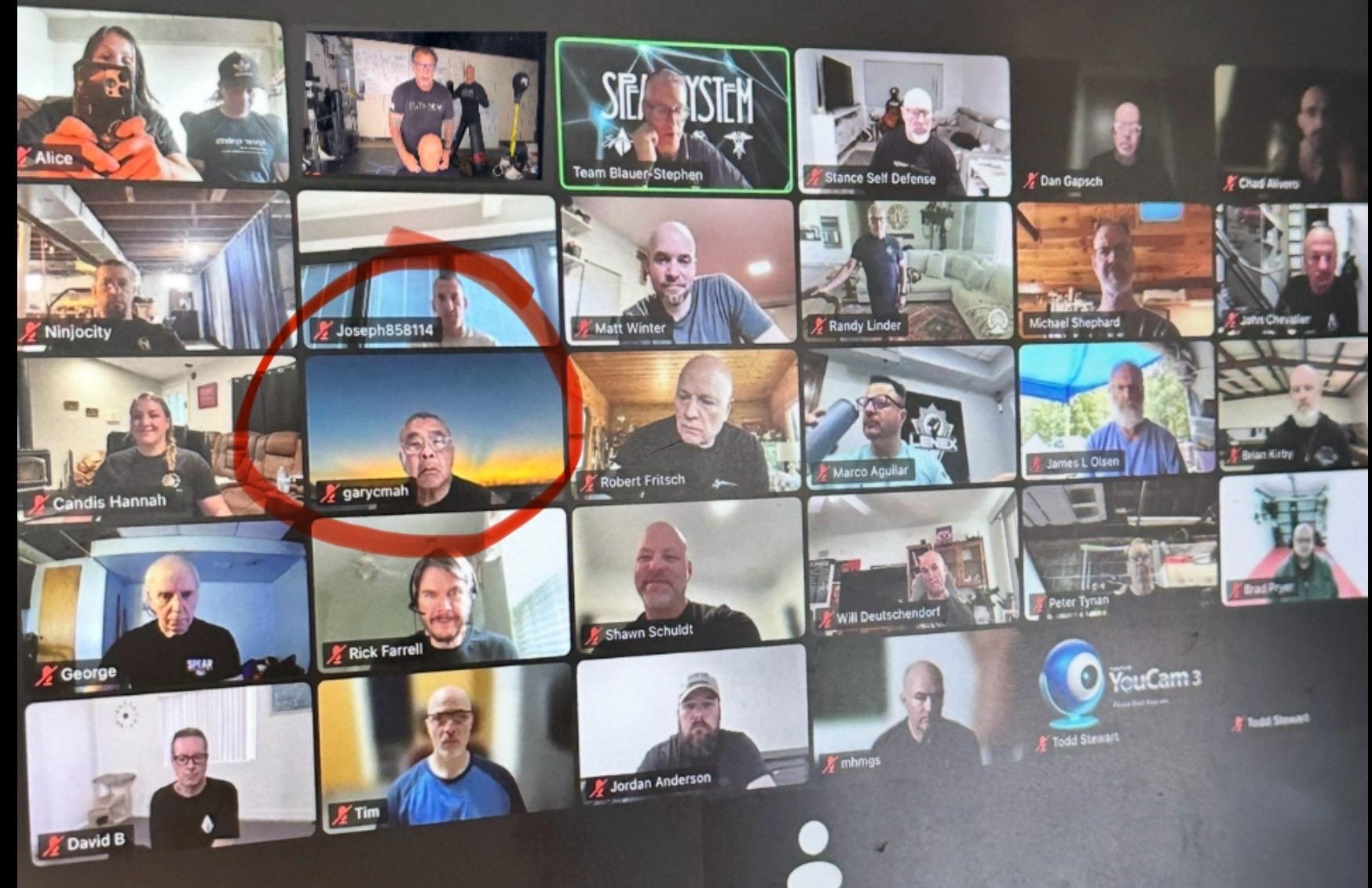
Gary's path into SPEAR did not start with a marketing funnel or a polished origin story. It started the way good systems often do — as a quiet pattern recognition among serious people. He spent years in Virginia Beach hosting Filipino martial arts seminars, with respected instructors coming through his space, knife work included. Again and again, a consistent refrain landed in his orbit: you're in Virginia Beach, you should be hosting Tony Blauer.
The seed got planted early, but Gary was busy building other things and serving other roles. Blauer's name stayed in the background until Gary finally acted on the nudge and attended a camp in Orlando around 2020–2021. What he found there was not "another system." It was a bridge. He continued his training, regularly attending Garage Gym live sessions.
For Gary, that bridge matters because of who he is and how he's lived. He describes himself as a volunteer by nature. He served 32 years as a volunteer reserve police officer, sworn and certified, and he did it without pay because contributing to community safety mattered to him. He spent decades in Rotary. He has done board service. He has built a life around showing up. SPEAR clicked because it gave him a practical, teachable way to extend that service into the everyday lives of ordinary people — without the baggage of teaching weapons tactics that require deep specialization, heavy legal risk, and years of repetition.
He puts it plainly: "situational awareness" and "choice speech" are most of what he wants to teach, with a smaller portion reserved for what to do "if you really have to do it." In that framing you can hear the throughline from police work to coaching. Most incidents can be defused before a fight ever starts, but the student still needs a body-based answer for the moment the world ignores the plan.
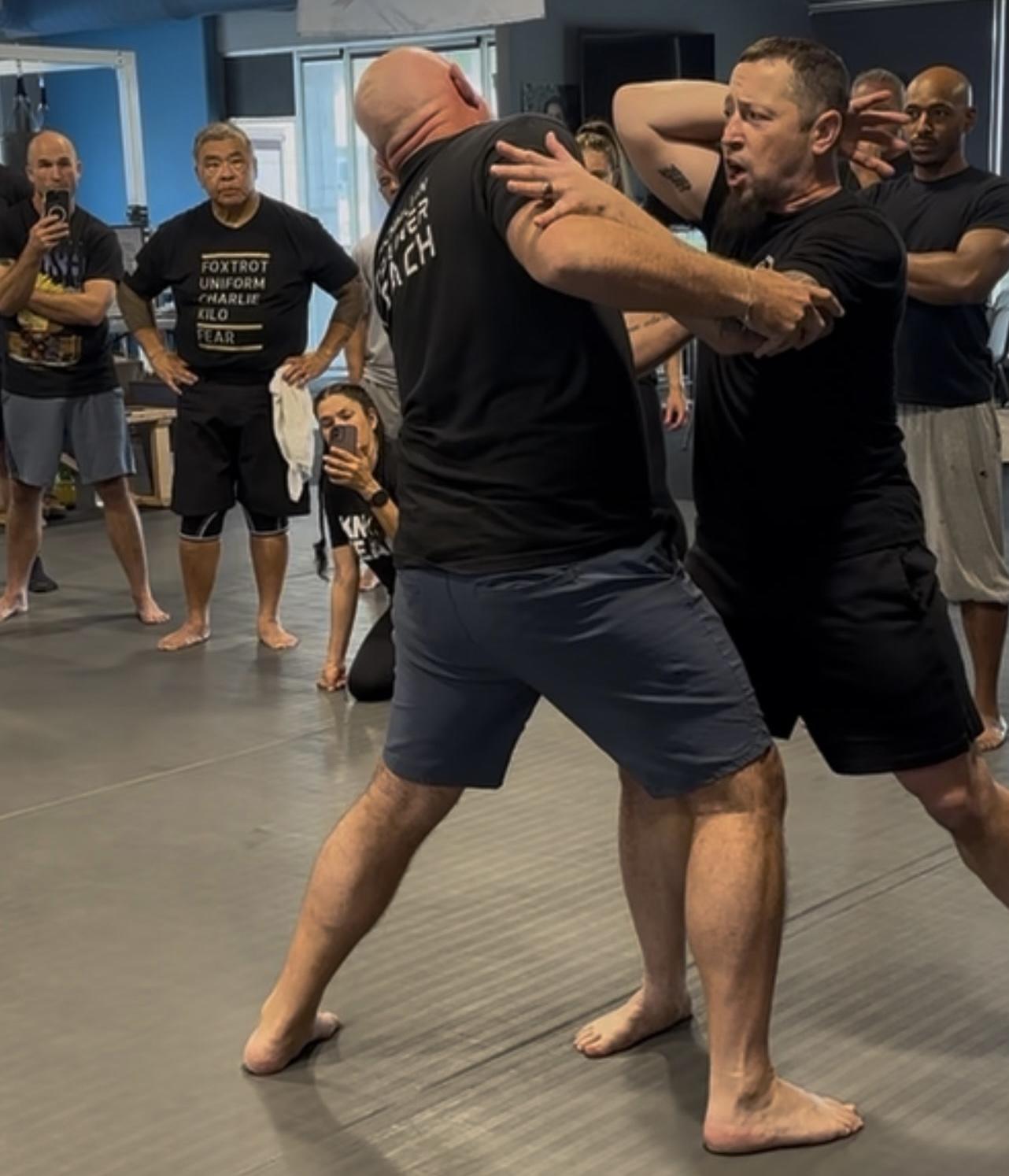
That's one reason Gary is so drawn to proof-of-principle. He repeatedly returns to the foundational drills because they create immediate belief. They take striking from an abstract idea to a felt experience. He emphasizes hands opening, fingers splaying, extension muscles engaging, structure aligning. He likes watching the student's face when they realize they can generate power. He likes the shift when they stop looking down, square up, and suddenly understand why posture and gaze change everything. Those "aha" moments are a form of competence you can see in the body.
Gary also teaches in a way that stays consistent with the ethics of the system. He is explicit about not wanting to teach people to depend on force multipliers. He carries options when appropriate. He talks about a solid metal pen as a legal, accessible tool, held in reverse grip, ready in a car console. He mentions travel hairspray as another improvised option. But he returns to the same principle: SPEAR is valuable because it is organic. You will do it anyway. The point is to convert that startle-flinch into action, break the attack, and get away.
His strongest personal "this works" moment was not a staged drill. It came in a real-life surprise. In a basement retail shop during a visit, one of the young employees jumped him as a prank. Gary was not expecting it. He got bear-hugged, went off balance, and went backward. Then the system showed up. The flinch converted. The lead hand was ready to index palm strike. The employee saw it in Gary's body and recognized the line he was about to cross. Contact broke. Gary walked away with the kind of evidence that drills are designed to approximate: suddenness, imbalance, surprise, and the body's ability to produce a protective answer.
You can see Gary's coaching philosophy in a single SPEAR sentence he repeats as a maxim he lives by. He didn't say it as a slogan. He said it as a correction he built into his own syllabus. It is a guardrail against ego and performative teaching. It is also a reliability principle: a student who believes in their own capacity is a student who will act under stress.
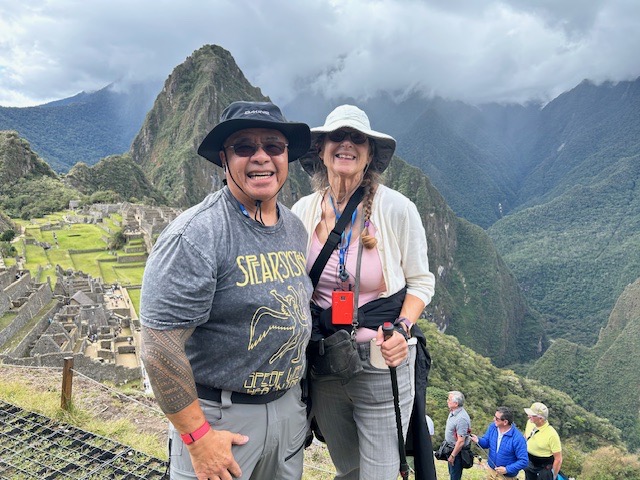
When asked who he would teach SPEAR to if he could choose anyone in the world, he did not name a celebrity or hero. He chose the victim who is dead. Someone who did not live to tell the tale. It's a stark answer, but it shows his moral center. He is not attracted to the fantasy of skill. He is haunted, in a productive way, by the cost of not having it. In that frame, "community service" stops being a phrase and becomes a mission: helping fewer people become stories that end too soon.
In the end, Gary's voice in the community is distinct because it is grounded. He doesn't sell fear. He sells capability. He doesn't chase complexity. He prioritizes what people can actually learn and use. He doesn't teach to impress. He teaches to transfer. And he keeps returning to the same quiet thesis: if you can help people become a little more aware, a little more skilled, and a little more confident in their own protective response, you are making the world safer in a way that is real.